The surcharge ban has everyone talking about card fees. The bigger opportunity is getting paid without a card at all.
A month on from the October 1 surcharge ban, businesses are still working out how to handle it. Some are absorbing the cost. Some are lifting prices. A few may be using it as cover to gouge, and some are probably still surcharging anyway. We’ve watched merchants cling to $10 card minimums for years after the rest of the market moved on, so we wouldn’t rule it out.
Most of the conversation is about who pays the card fee. Far less of it asks whether you need the card at all, and plenty of people in our industry would rather keep it that way.
You need cards less than you think.
That sounds like a stretch. Cards make up more than 90% of the payments mix, with cash accounting for around 8% in total. Even the stubbornest $1 shop and the cheapest takeaway joint has had to take cards to keep up. But a lot has changed in the decade since cards overtook cash. You can now get paid digitally without a card involved at all, and plenty of business owners don’t know it yet.
PayID is for businesses, as well as diners
In Australia, the obvious example is PayID. It’s been around since 2018, and most of us know it from splitting dinner with friends rather than from buying anything. You type someone’s phone number or email into your banking app instead of their BSB and account number, and the money is there.
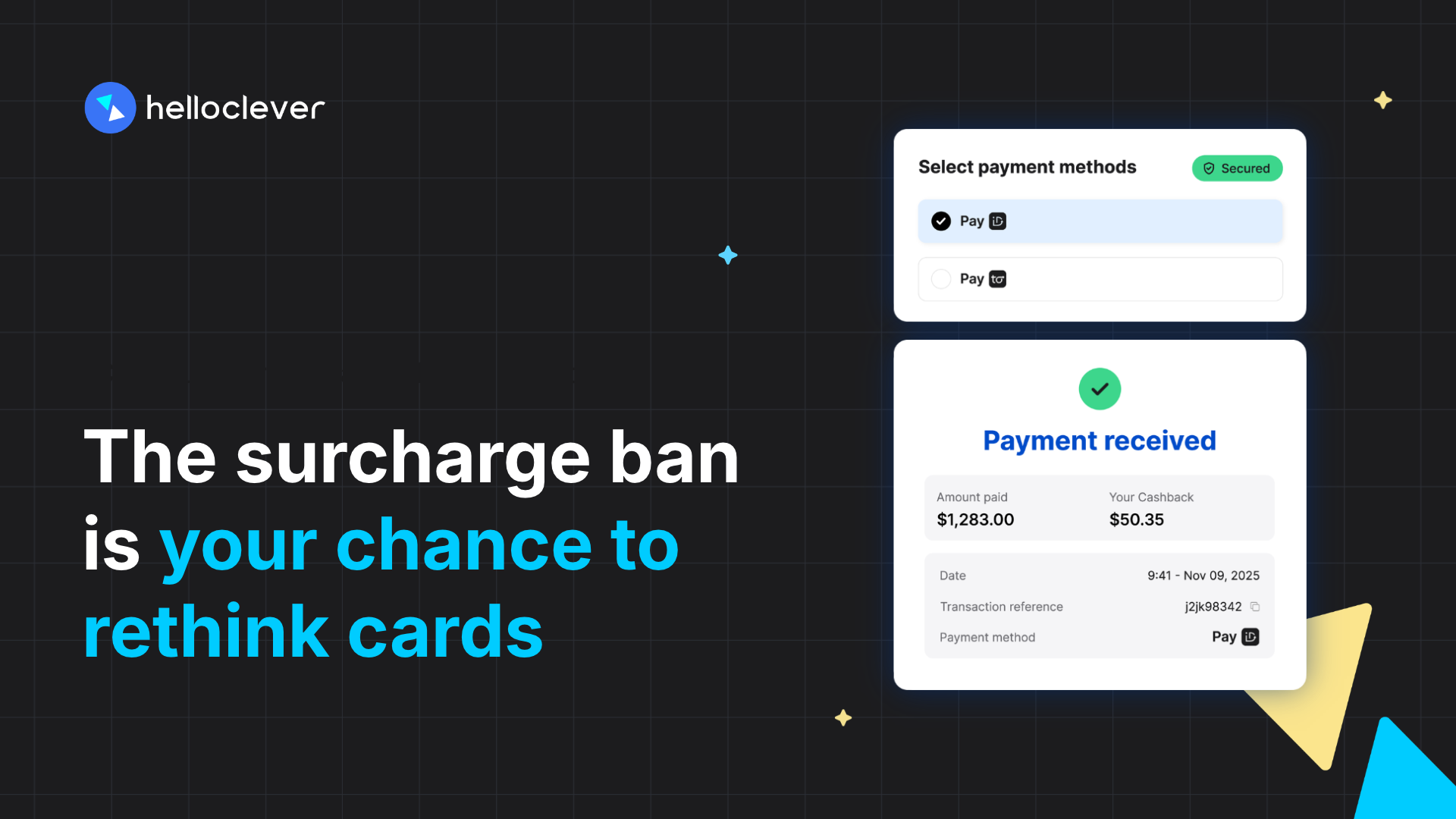
Your business can do exactly the same. You get your own PayID, your customer pays it from their banking app, and the money lands in your account in seconds, already reconciled. It runs on the New Payments Platform, Australia’s real-time payments network and the same rail behind those dinner transfers. No card, no card network fees, no extra layer in the middle.
For a one-off purchase, we’ll admit it’s more steps than tapping a card. For a repeat customer, it really isn’t.
Say you run a cafe. Nudge your regulars to pay for their morning coffee with PayID instead of a card, with a small discount or a loyalty perk for doing it. You get the money faster and you pay less to receive the money. Card fees average around 1.5%. PayID typically costs less than 0.5%. On one single flat the difference is nothing. Across a year of regulars, it adds up, and you can hand some of it back to keep them paying that way.
The catch is a bit of setup on your customer’s side. And yes, change is hard. Australia went cashless because tapping was easy. Everyone already had a phone in their hand, and cash quietly became the annoying option.
Change can also happen fast. Contactless went from novelty to default here in about 18 months here, and the push came from Coles and Woolworths deciding how their customers would pay.
That’s the part merchants tend to miss.
Businesses assume the payments industry sets the terms and it’s actually the other way around. We work in this industry, and we can tell you it builds what merchants ask us for. If a third of Australian businesses put PayID at the checkout tomorrow, providers would fall over themselves to make it slicker.
Keep cards, add PayID
Dropping cards is a fast way to lose customers, and any online retailer still needs a card strategy. Airlines have offered PayID for years alongside plenty of other payment methods. PayID is simply the cheapest of them.
You can do the same. Add PayID as an option, use the savings to make it worth your customer’s while, and see what happens.
The payments conversation has got deep into the weeds, and honestly, that suits the industry fine. Interchange. Scheme fees. Payment rails. No wonder business owners tune out. Dull and complicated is how things stay exactly as they are.
So buck the trend. Treat the surcharge ban as the moment you stop accepting whatever your bank or provider tells you. Pull your last three merchant statements and work out what you’re actually paying to get paid. Worst case, you’ll finally know. Best case, book a rates review with our team and we’ll show you what adding PayID would mean for your fees.
Leave a Reply