Australians reported almost $2.18 billion in scam losses to Scamwatch, ReportCyber, IDCARE, Australian Financial Crimes Exchange (AFCX) and Australian Securities and Investment Commission (ASIC) (Scamwatch, 2026).
This week is Scams Awareness Week, running from 24-28 August. This year’s theme is “No one’s just a number.” Behind every scam report is a real person, and often a real business whose name has been used without their say-so.
The payment method you offer at checkout is part of how easy or difficult you make a scammer’s job.
It only takes a few changed digits to steal an invoice payment
Invoice payments get stolen the same way by scammers, over and over. A scammer intercepts an email or copies the layout of a real invoice, changes the BSB and account number to their own, and leaves everything else as is: your logo, your invoice number, the amount owing.
Here’s why this scam works. Payments using a BSB and an account number could be redirected if a scammer replaced the legitimate account details on an invoice. Your customer pays the amount owning, on time but the money lands in the scammer’s account instead of yours.
No individual business is at fault here. The gap sits with the payment method itself: a static invoice has no way to prove who is actually asking to be paid.
What PayID does differently
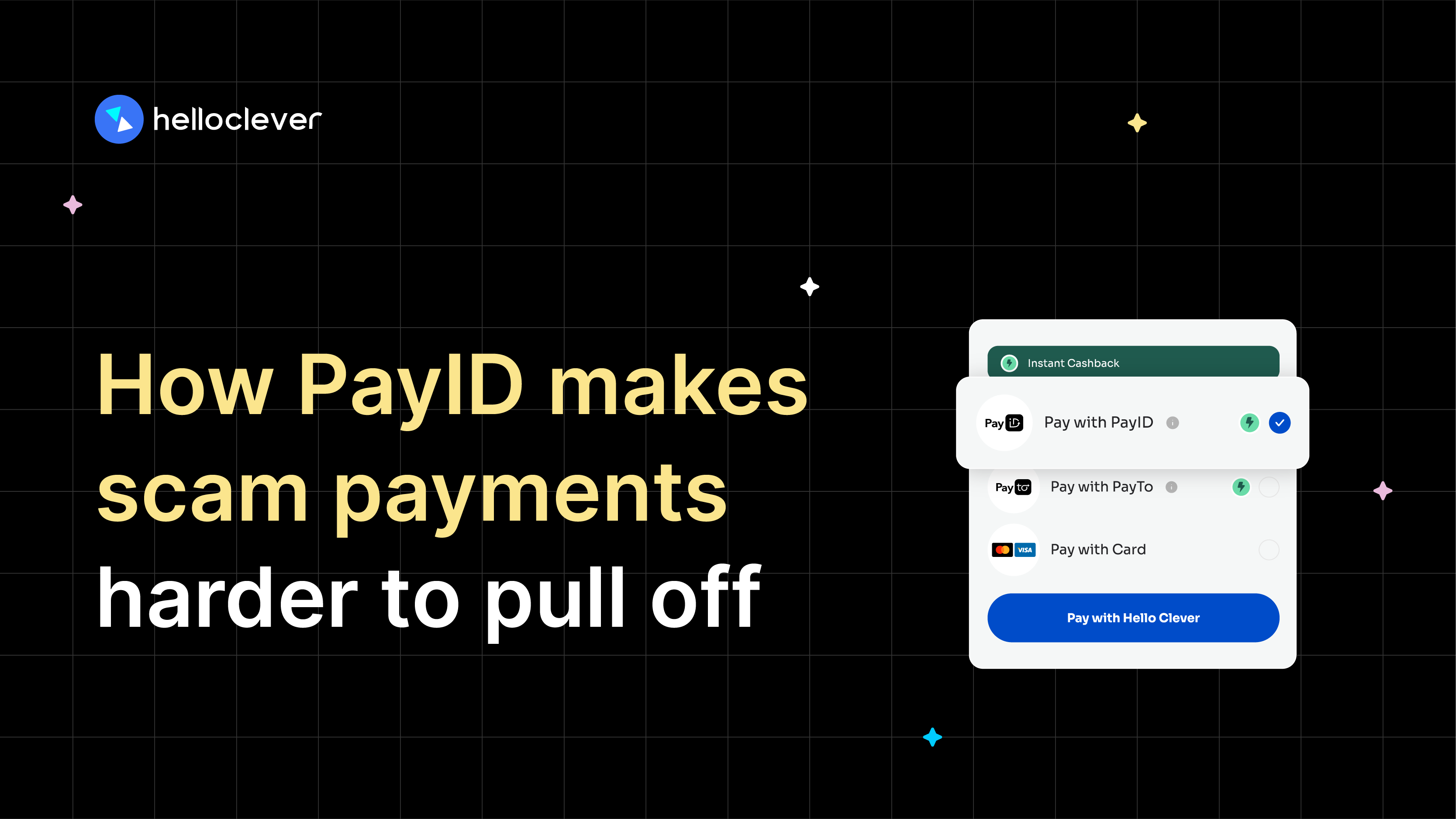
When a customer pays you through PayID, they enter your ABN, email or phone number. Their banking app then displays your registered business name before they confirm the payment, so customers can check they are paying the right entity.
That single step changes what a scammer needs to pull off their scam. A standard bank transfer relies on the account number entered being correct. PayID adds a name check on top of that: a scammer’s own PayID can’t return your business name no matter what they enter, since a PayID only ever shows the name it’s actually registered to.
PayID doesn’t stop every scam. No payment method does. But it does shut down the easiest one: a customer paying blind with nothing to check against.
PayID’s payoff for your business
Offering PayID makes your business a harder target for invoice scams. A scammer can copy your invoice, but they can’t make their PayID display your name.
PayID pays off outside of scam prevention as well. Payments settle in real time*, so you’re not waiting days for funds to clear. And because customers pay using your ABN, email or phone number instead of typing in a BSB and account number, there’s less room for the manual entry mistakes that can cause misdirected payments.
If you’re not already offering PayID to your customers yet, Hello Clever makes it simple to start. Find out more about accepting real-time payments with Hello Clever here. https://helloclever.co/real-time-payments
Stop. Check. Protect.
Scamwatch’s advice to consumers is to stop, check, protect. Here’s what that looks like for merchants.
- Offer a payment method that displays a verified business name, so customers have something real to check before they pay
- Avoid asking customers to manually key in raw account numbers, so payments are less likely to be misdirected
Scams Awareness Week is a reminder that customers aren’t the only line of defence against scammers. The payment methods you choose to offer can play a part in keeping your community safe.
*subject to availability and applicable security checks
Leave a Reply